
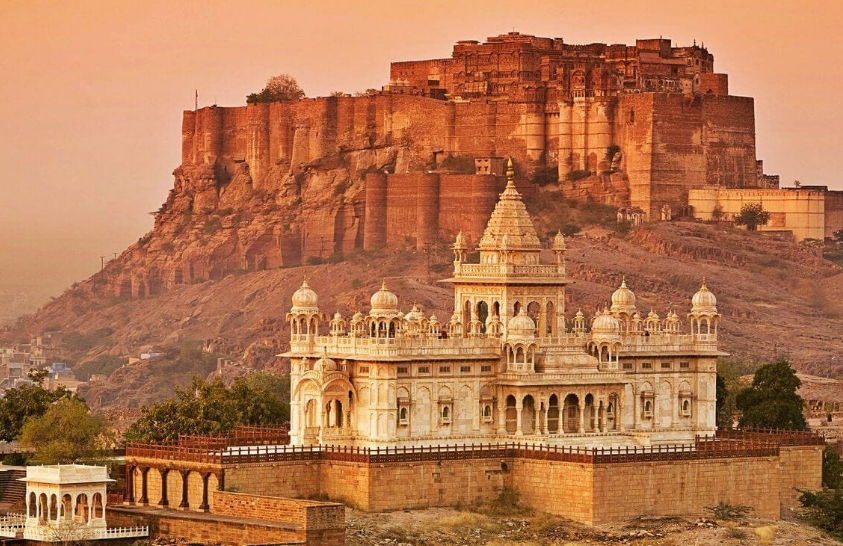
Exploring the Majestic Forts and Palaces of Rajasthan

Rajasthan, the “Land of Kings,” is a place where history whispers through the walls of grand forts and royal palaces. From the windswept deserts of Jaisalmer to the tranquil lakes of Udaipur, Rajasthan’s architectural marvels tell tales of courage, romance, and opulence. These majestic structures, many of which are centuries old, stand as proud reminders of a bygone era and offer travelers a chance to walk through living history. In this blog, we journey through some of the most iconic Forts & Palaces in Rajasthan that continue to captivate visitors from around the world.
1. Amber Fort, Jaipur
Perched atop a hill overlooking Maota Lake, Amber Fort is a stunning blend of Hindu and Mughal architecture. Built in the 16th century by Raja Man Singh I, this fort is known for its ornate palaces, mirror work, courtyards, and intricate frescoes.
One of the key attractions inside the fort is the Sheesh Mahal or Mirror Palace, which sparkles with thousands of tiny mirror tiles. Elephant rides, sound-and-light shows, and panoramic views of the Aravalli hills add to the charm of visiting Amber Fort.
2. Mehrangarh Fort, Jodhpur
Towering above the blue city of Jodhpur, Mehrangarh Fort is one of the largest and most well-preserved forts in India. Built around 1459 by Rao Jodha, the fort sits 400 feet above the city and offers commanding views of Jodhpur.
Inside, you’ll find a series of palaces with intricate carvings and expansive courtyards. Notable attractions include the Phool Mahal, Moti Mahal, and the fort’s museum, which houses royal artifacts, arms, costumes, and paintings.
3. City Palace, Udaipur
Set against the serene backdrop of Lake Pichola, the City Palace of Udaipur is a magnificent complex that reflects the grandeur of the Mewar dynasty. Constructed over nearly 400 years, the palace complex includes several palaces, gardens, and courtyards.
Highlights include the Crystal Gallery, Zenana Mahal, Fateh Prakash Palace, and the sweeping views from the balconies that overlook the lake and the city. The palace also connects to the famous Lake Palace, now a luxury hotel.
4. Jaisalmer Fort
Rising like a golden mirage from the Thar Desert, the Jaisalmer Fort is one of the very few “living forts” in the world. Built in 1156 by Rawal Jaisal, the fort is home to shops, hotels, temples, and residences.
Often called the Golden Fort or Sonar Quila, it glows with a golden hue at sunrise and sunset. Inside, visitors can explore Jain temples, merchant havelis, and winding alleys filled with history and charm.
5. Junagarh Fort, Bikaner
Unlike most forts in Rajasthan that are built on hills, Junagarh Fort stands on the plains of Bikaner. Constructed in the late 16th century by Raja Rai Singh, this fort is known for its beautiful interiors and impressive structure.
The fort complex includes temples, palaces, and pavilions with elaborate mirror work, carvings, and paintings. Key places to see here are the Anup Mahal, Chandra Mahal, and Phool Mahal.
See also: How Private Jet Catering Meets the Demands of High-Profile Clients
6. Chittorgarh Fort
A symbol of Rajput pride and valor, the Chittorgarh Fort is one of the largest forts in India. Spread over 700 acres, the fort has seen numerous battles and sieges, and it stands as a memorial to heroic acts of self-sacrifice, especially the Jauhar led by Rani Padmini.
The fort houses beautiful structures such as Vijay Stambh (Victory Tower), Kirti Stambh, Rana Kumbha Palace, and Padmini’s Palace, each carrying stories of bravery and tragedy.
7. Hawa Mahal, Jaipur
Though not a fort in the traditional sense, the Hawa Mahal or “Palace of Winds” is one of the most iconic structures in Jaipur. Built in 1799 by Maharaja Sawai Pratap Singh, the palace features 953 small windows (jharokhas) that allowed royal women to observe street festivals without being seen.
Its honeycomb-like façade and pink sandstone exterior make it a photographer’s delight and an essential stop on any trip to Jaipur.
8. Umaid Bhawan Palace, Jodhpur
A symbol of 20th-century opulence, the Umaid Bhawan Palace is still home to the royal family of Jodhpur. Built during a time of famine to provide employment, it is one of the largest private residences in the world.
Part of the palace operates as a luxury Taj hotel, and another section houses a museum that showcases the lifestyle of Jodhpur’s royal lineage, vintage cars, and royal memorabilia.
9. Ranthambore Fort
Located within the Ranthambore National Park, the Ranthambore Fort offers a unique combination of history and wildlife. Dating back to the 10th century, the fort overlooks the surrounding forest and lakes, making it a scenic viewpoint for wildlife sightings.
The fort is also a UNESCO World Heritage Site under the group “Hill Forts of Rajasthan” and houses temples, stepwells, and royal ruins worth exploring.
Why Visit the Forts and Palaces of Rajasthan?
- Architectural Marvels: Intricate carvings, mirror work, jharokhas, and Rajput-Mughal fusion styles.
- Cultural Heritage: Each fort and palace tells a unique story of battles, love, honor, and art.
- Breathtaking Views: Panoramic views of cities, deserts, lakes, and hills from the fortresses.
- Living History: Walk through palaces that are still homes, museums, or hotels preserving royal traditions.
Conclusion
Exploring the forts and palaces of Rajasthan is like stepping into a historical epic, where every wall and window has a story to tell. Whether you’re a history buff, an architecture enthusiast, or simply a curious traveler, these majestic structures offer an unforgettable experience. From the romance of Udaipur to the rugged valor of Chittorgarh, Rajasthan invites you to witness the legacy of kings in stone and story.