
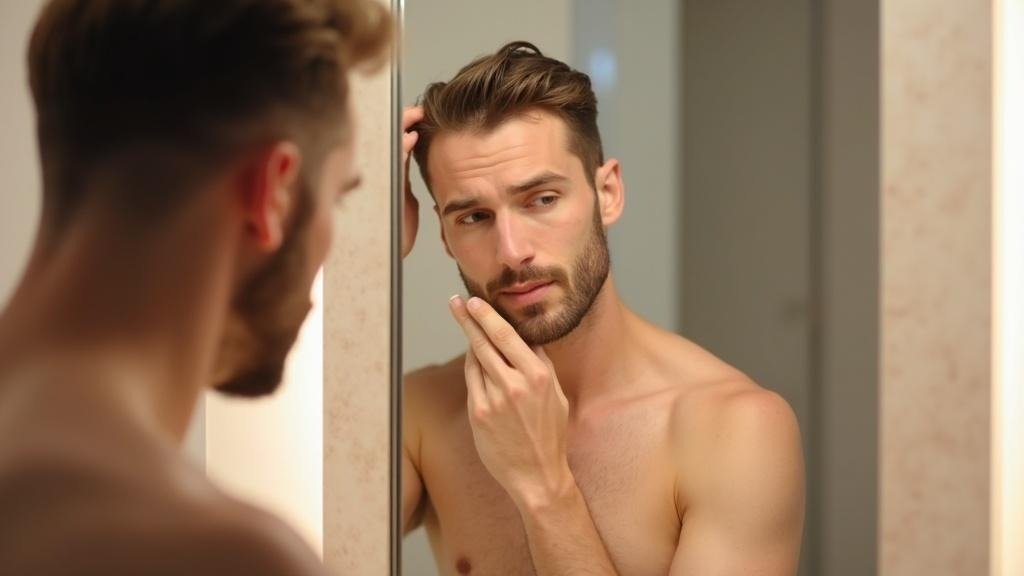
6 Hair Loss Treatments Worth Your Money (and One Free Tool That Should Come First)

Most people start with a shampoo. Then a supplement. Then, six months later, they finally end up on finasteride, which is where the evidence pointed all along. The proven hair loss treatments category is full of noise, and almost nobody begins in the right place.
Here is a short, opinionated list of what actually works, starting with something that costs nothing.
1. HairLine AI (Free Browser Tool, No Signup)
Price: free. That is the first thing worth saying.
Before you spend a dollar on any treatment, it helps to know your actual Norwood stage. HairLine AI lets you upload a photo or use your webcam, then runs facial detection and a vision model classification to estimate your stage, how many grafts a transplant would likely require, and a rough cost range. The whole thing takes about two minutes and lives in a browser tab.
What makes this genuinely useful is that it strips out the sales layer. There is no quiz designed to funnel you toward a subscription. No upsell. You get a staging read and an education on what the options mean for someone at your stage, whether that is minoxidil, finasteride, or a consult with a hair surgeon.
The honest caveat: an AI photo read is a starting point, not a clinical diagnosis. A dermatologist or licensed clinician still needs to confirm the picture and guide any prescription treatment. But knowing roughly where you stand before that appointment? That is not nothing.
See also: Microsoft Dynamics Partners and the Green Tech Sector: Building Sustainable ERP Frameworks
2. Generic Minoxidil (Topical or Oral)
Minoxidil is one of the two treatments with real clinical backing for hair loss. Oral generic versions now run well under $20 a month from most pharmacies. The topical 5% foam or solution has been around for decades and is available over the counter.
Results take time. Three to six months before you see meaningful change, and you have to keep using it indefinitely. Stop, and what you kept tends to go. Worth knowing going in.
3. Finasteride (Generic Oral, via Keeps or Similar)
Finasteride is the other evidence-backed option, prescription only, and it works by blocking DHT, the hormone most responsible for male pattern baldness. Generic oral finasteride is cheap. Keeps offers it on three-month plans at pricing that undercuts most telehealth competitors, with roughly $5 shipping.
The side effects conversation is real. A small percentage of men who take it report changes in sexual function. That conversation belongs between you and a clinician, not a landing page. A telehealth platform like Keeps or Roman connects you with a licensed provider who can assess whether it makes sense for you.
4. Hims (Topical Finasteride + Combo Plans)
Hims stands out for one specific reason: it is the only major telehealth brand currently offering topical finasteride, which some men prefer because it may carry a lower systemic absorption profile than the oral version, though long-term head-to-head data is still limited. They also offer oral minoxidil, oral finasteride, and combination plans, which gives more flexibility than most competitors.
Pricing is higher than Keeps on comparable oral generics, but the range of formulations is wider.
5. Happy Head (Prescription Topical Compounds)
Happy Head focuses on custom topical prescription formulas that typically combine finasteride and minoxidil in a single application. For people who want a compounded prescription without juggling two separate products, the convenience factor is real. The formulas are physician-prescribed and pharmacy-compounded.
It costs more than buying generic minoxidil off the shelf. Whether that premium is worth it depends on how much compliance matters to your routine.
6. Ketoconazole Shampoo (OTC Adjunct)
This is the unglamorous pick, but it belongs here. Ketoconazole 1% shampoo (brands like Nizoral, or generic) has some evidence suggesting it may modestly support the scalp environment when used alongside minoxidil or finasteride. It is not a standalone treatment. It is cheap, widely available, and a reasonable addition to a protocol that already includes one of the two evidence-backed mainstays.
Do not use it as a replacement for anything on this list. It is a supporting player.
A Note on Realistic Expectations
None of these treatments, including the prescription ones, work for everyone. Results vary significantly by stage, genetics, and how early you start. A tool like HairLine AI helps you understand what stage you are at before committing to any of these options. After that, a dermatologist or clinician should be part of the conversation, especially for anything prescription.
Common Questions
Does it matter which Norwood stage you are at before starting minoxidil or finasteride?
Yes, and meaningfully so. Both treatments work better the earlier you start. Someone at Norwood 2 or 3 is trying to hold ground they still have. At Norwood 5 or 6, the realistic goal shifts toward slowing further loss rather than recovery. Knowing your stage first, even from a tool like HairLine AI, helps calibrate what to expect.
Is topical finasteride from Hims actually safer than the oral version, or is that mostly marketing?
The reasoning is pharmacological, not invented. Topical application does produce lower serum DHT reduction than oral finasteride in published studies, which theoretically means less systemic exposure. Whether that meaningfully reduces side effect risk in practice has not been settled by long-term head-to-head trials. It is a reasonable option, not a proven upgrade.
What is the real difference between Happy Head and just buying generic minoxidil and finasteride separately?
Happy Head combines both into one compounded topical, so you apply one product instead of two. The formulas are prescription-only and pharmacy-compounded. The cost is higher than buying each generic separately. The practical difference is convenience and adherence. If managing two separate products causes you to skip doses, the premium may pay off.
How accurate is HairLine AI compared to seeing a dermatologist in person?
HairLine AI uses photo-based vision model classification to estimate your Norwood stage. It is a starting point, not a substitute for clinical assessment. A dermatologist can examine scalp density, miniaturization under magnification, and rule out non-androgenetic causes of shedding that a photo cannot capture. Use the tool to arrive informed, not to skip the appointment.
Can you use ketoconazole shampoo the same week you start finasteride or minoxidil, or should you wait?
There is no established reason to stagger them. Ketoconazole shampoo is an adjunct with a different mechanism, and nothing in the published literature suggests a timing conflict with starting minoxidil or finasteride. Most protocols that include it simply add it from day one. That said, confirm with your prescribing clinician if you have any scalp sensitivity or skin conditions.
Sources
- American Academy of Dermatology: Minoxidil and finasteride evidence summaries
- Keeps, Hims, Roman, Happy Head: public product and pricing pages (verified 2025-2026)
- National Library of Medicine: Ketoconazole and androgenetic alopecia (published clinical literature)
- Norwood Scale: original Hamilton-Norwood classification, widely published in dermatology references