
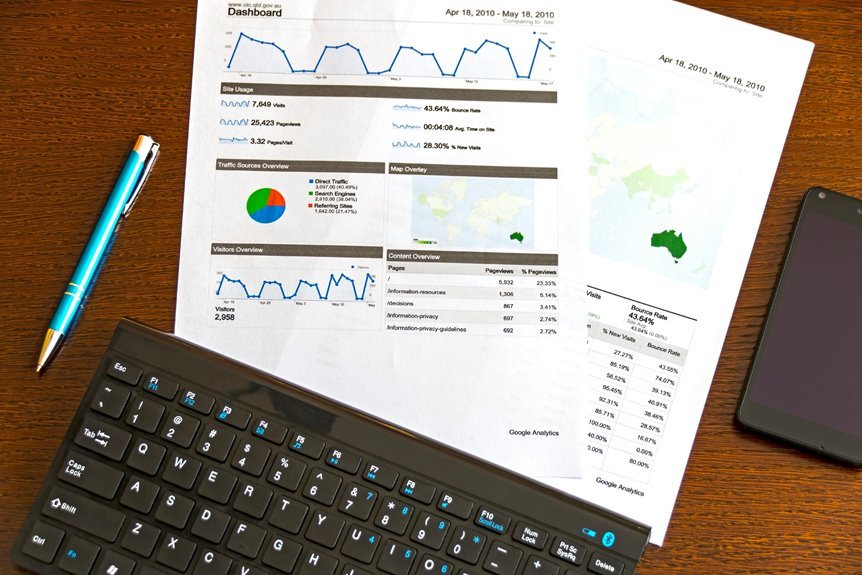
Financial Performance Dashboard: 101023442, 101030500, 101040500, 104439950, 105517881, 107502735

The Financial Performance Dashboard for accounts 101023442, 101030500, 101040500, 104439950, 105517881, and 107502735 serves as a crucial tool for analyzing financial metrics. It offers stakeholders a clear view of performance trends and enables informed decision-making. The integration of data visualization enhances comprehension, yet the effectiveness of this dashboard depends on its alignment with organizational goals. Exploring its implications may reveal deeper insights into optimizing financial strategies.
Importance of Financial Performance Dashboards
Financial performance dashboards are crucial tools for organizations seeking to optimize their financial health and strategic decision-making.
These dashboards enhance data visualization, enabling stakeholders to interpret complex financial data efficiently. By presenting key metrics clearly, they facilitate informed decision making, allowing organizations to respond swiftly to financial trends and challenges.
Ultimately, effective dashboards empower entities to navigate their financial landscapes with greater autonomy and insight.
Key Identifiers in Financial Performance Analysis
Effective financial performance dashboards not only present data but also highlight key identifiers that are vital for comprehensive financial analysis.
Key metrics, such as return on investment and profit margins, serve as essential performance indicators. These identifiers allow stakeholders to gauge financial health, make informed decisions, and ultimately drive strategic initiatives.
A focused approach to these elements enhances clarity in financial reporting and analysis.
Best Practices for Utilizing Financial Performance Dashboards
While the design of a financial performance dashboard is crucial, its effective utilization is equally important for maximizing insights.
Best practices include dashboard customization to align metrics with organizational objectives and employing effective data visualization techniques to enhance comprehension.
Regularly reviewing and updating the dashboard ensures it remains relevant, empowering stakeholders to make informed decisions and fostering a culture of transparency and accountability.
Conclusion
In conclusion, financial performance dashboards serve as vital tools for organizations seeking to enhance strategic decision-making and accountability. For instance, a hypothetical company, ABC Corp, utilized its dashboard to identify declining revenue trends in account 101030500, allowing management to implement targeted marketing strategies. This proactive approach not only reversed the downward trend but also improved overall financial health. By embracing such tools, organizations can foster transparency and responsiveness to financial dynamics, ultimately driving better performance outcomes.